

In today's procurement landscape, having skilled category management professionals on your team is more critical than ever. Businesses are facing supply chain disruptions, economic uncertainty, and pressure to deliver more value. At the same time, digital procurement tools and category management software are flooding the market.
These innovations promise efficiency and insights, but they cannot replace human expertise. In fact, the procurement profession is already grappling with a shortage of skilled practitioners. Now more than ever, organizations need talented category management practitioners to steer strategy, unlock value, and make the most of new digital tools.
Implementing a category management strategy can drive significant benefits, from cost savings to supplier innovation, but only if you have the right people to execute it. This blog will explore what category management is, the benefits of category management (and why people are the key to unlocking them), and why the best technology or AI can't substitute for talented human practitioners.
What Is Category Management - And Why Talent Powers It
So, what is category management exactly, and why does having talented people matter so much? Category management is a strategic approach to procurement in which you group related purchases into categories and manage each category as a mini business unit. Rather than buying reactively, you develop a category management strategy for each area of spend. In other words, category management is about moving from tactical buying to strategic procurement.
In procurement terms, category management goes beyond simply negotiating prices on individual contracts. It involves understanding the supply market dynamics, the risk factors, and the value opportunities within a category of spend. You might, for instance, treat "Professional Services" or "Raw Materials" as distinct categories, each with its own strategy. The role of a category manager (or category management practitioner) is to develop and execute these strategies. Category managers take a big-picture view: they collaborate with stakeholders across the business, plan for the long term, and focus on total value, not just cost.
Talent is the power behind this approach. You can have a documented process and fancy category management software, but it's the people driving it who make the real difference. Talented category management practitioners bring the insight and creativity needed to turn a strategy on paper into real results. They interpret data, ask the right questions, and make judgement calls that a standard process or tool cannot do alone. Without skilled practitioners, even the best category management procurement initiative will stall. It's the difference between having a cookbook and having a chef - you need that expertise to bring the recipe to life. Category management, at its heart, is a human-led, strategic business practice. Tools and templates can guide the way, but talent powers every step of the journey.

Benefits and Advantages of Category Management - Unlocked by People
- Significant Cost Savings: By consolidating spend and leveraging volume, companies can negotiate better deals. This is one of the primary advantages of category management - uncovering hidden savings that tactical buying would miss.
- Improved Supplier Relationships: Category management encourages a more strategic, long-term view of suppliers. Instead of one-off transactions, practitioners develop partnerships, drive supplier innovation, and ensure suppliers' capabilities are aligned with the company's goals.
- Better Risk Management: With a clear view of an entire spend category, it's easier to spot supply risks and take proactive steps. For example, a category manager might diversify sources or hold extra inventory for a high-risk category, improving supply continuity.
- Increased Efficiency and Compliance: Grouping purchases into categories often streamlines processes and reduces maverick spending. Procurement policies become clearer for each category, leading to more consistent compliance and efficient purchasing.
- Alignment with Business Goals: Perhaps most importantly, category management ties procurement activities to the organization's strategic objectives. Whether the goal is cost reduction, innovation, sustainability, or quality improvement, category strategies are designed to deliver on those targets.
- Sustainable supply base: By developing category strategies that will realize the organization’s social and environmental goals for what we buy, our suppliers and supply chains.
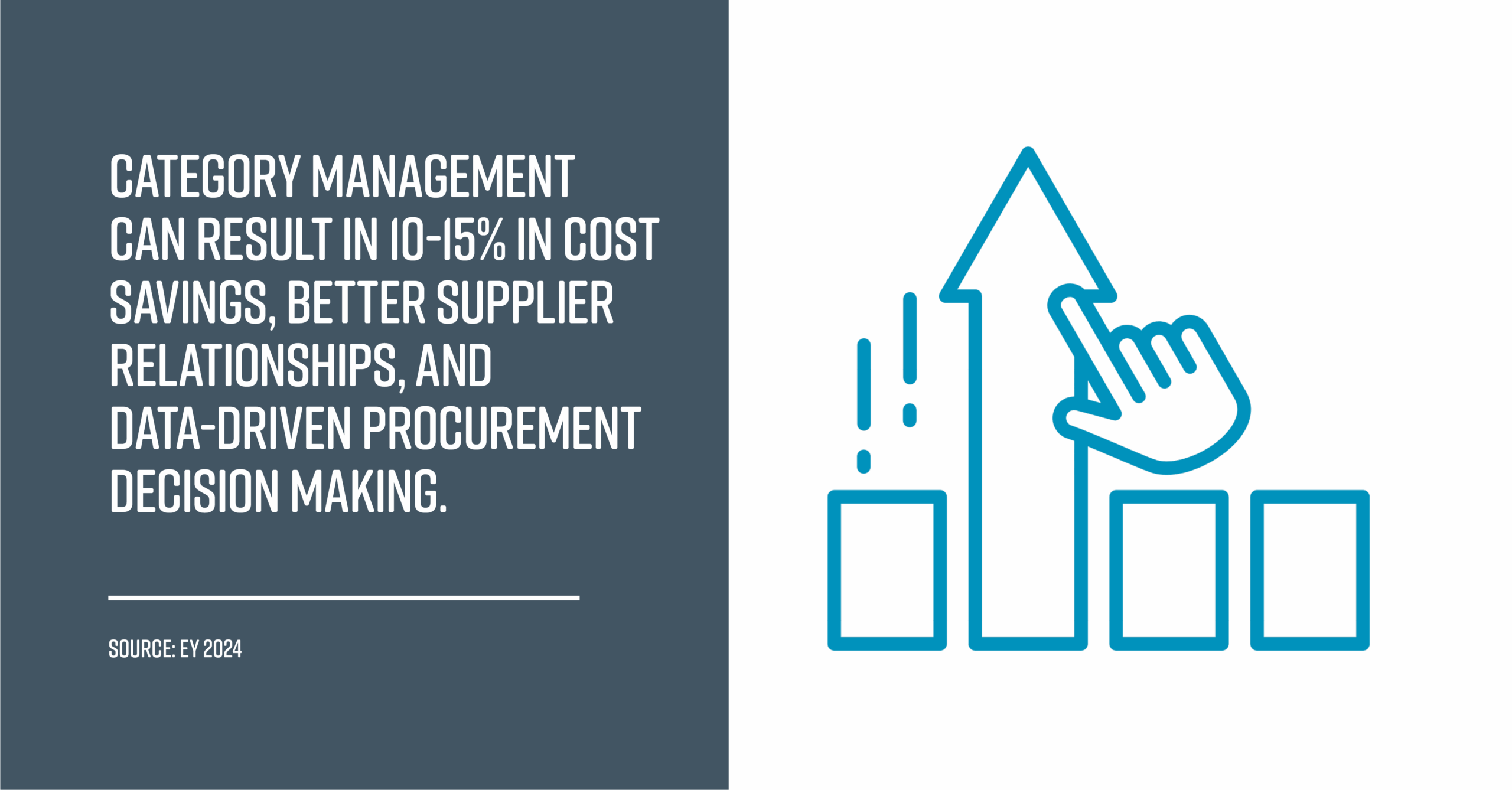
These advantages of category management sound great, but they don't happen automatically. They are unlocked by people. Skilled practitioners are the ones who identify these opportunities and act on them. You might invest in a category management software platform that generates slick dashboards and reports. However, without capable category managers to interpret that data, engage stakeholders, and drive change, those insights sit idle.
In fact, many companies struggle to realize the full benefits of category management because they lack the necessary skills on their team. According to Art of Procurement, only about 30% of organizations that have implemented category management have the resources or technical skills needed to execute it effectively. The other 70% likely have the same processes and tools on paper, but they aren't reaping the rewards.
The message is clear: category management's benefits are only unlocked by the people behind it. A talented category management practitioner can take a spend analysis and turn it into an actionable strategy that saves millions. They can see a contract not just as a legal document, but as a living agreement to be managed for continuous improvement. Without these practitioners, even a well-designed category management program will yield mediocre results.
Why People Outperform Tools
In an age of AI and automation, a question arises: can technology replace the need for talented category managers? Digital procurement solutions and AI analytics have indeed become powerful. Modern systems can crunch vast amounts of spend data, suggest optimal order quantities, or even flag potential supply disruptions automatically. Category management software can streamline the workflow of building a strategy. These tools are incredibly valuable - and every leading procurement team uses them. But tools are exactly that: tools. It's people who must wield them effectively.
The idea that AI might fully take over strategic procurement decision-making is a myth we need to dispel. Human insight remains irreplaceable. An algorithm can quickly analyze past spend and market prices, but it cannot fully grasp the nuances of supplier relationships, organizational culture, or the subtleties of a negotiation. Why do people outperform tools in category management? Because procurement is ultimately about relationships, context, and judgement. A category management system might tell you who your top suppliers are and how they're performing, but a skilled practitioner knows why they're performing that way and how to improve the situation.
Consider risk management as an example. Software might alert you to a supplier's bankruptcy risk by monitoring financial data. That's useful information, but what next? A talented category manager will proactively develop a mitigation plan: perhaps finding alternate suppliers, discussing with the at-risk supplier to understand the situation, or renegotiating terms to protect the business. The software flags an issue; the human solves it.
The same goes for innovation and strategic decisions. AI can generate recommendations based on patterns, but it lacks emotional intelligence, contextual judgment, and creative problem-solving. AI excels at optimizing tasks; humans excel at innovating and building trust. In other words, automation can handle routine work (like auto-reordering or basic spend analysis), which frees up category managers to focus on more strategic activities. Rather than being a threat, these technologies are force multipliers for talented professionals. The best outcomes arise when you combine digital tools with human expertise.
The same goes for innovation and strategic decisions. AI can generate recommendations based on patterns, but it lacks emotional intelligence, contextual judgment, and creative problem-solving. AI excels at optimizing tasks; humans excel at innovating and building trust. In other words, automation can handle routine work (like auto-reordering or basic spend analysis), which frees up category managers to focus on more strategic activities. Rather than being a threat, these technologies are force multipliers for talented professionals. The best outcomes arise when you combine digital tools with human expertise.
Category management procurement is fundamentally a collaborative and strategic exercise. It involves persuading stakeholders, adapting to sudden market changes, and sometimes making judgment calls with incomplete information. No software can replicate the gut feeling of an experienced practitioner who senses a supplier's unspoken hesitation in a meeting, or who creatively crafts a win-win deal that balances cost, quality, and sustainability. Those human elements - insight, empathy, influence - are where people outperform tools.
Organizations that understand this invest in technology and in developing their people. They know that while tools can greatly enhance efficiency, it's the people who deliver the big wins.
The Qualities of High-Impact Category Management Practitioners
So, what sets apart a high-impact category management practitioner? If you're looking to build a team of all-star category managers, here are some key qualities and skills to seek and develop:
- Strategic Vision with Practical Execution: Top category managers see the big picture. They understand the company's strategy and how procurement can support it. They can define category management strategies that align with business goals and then break them down into actionable plans.
- Deep Procurement Expertise: A strong foundation in procurement and sourcing is a must. The best practitioners know how to do category management using a proven process. They analyze spend data, conduct market research, segment suppliers, and build negotiation strategies in a structured way. Their expertise might be augmented by category management software, but they are not reliant on it; they use it to enhance their own analysis and decision-making.
- Analytical and Data-Savvy: Today's category management requires comfort with data. High-impact practitioners are skilled in spend analysis, cost modelling, and scenario planning. They leverage digital procurement tools and analytics to uncover trends and insights. Crucially, they can interpret the data in context and draw meaningful conclusions. Being analytical also helps in measuring results and benefits of category management initiatives over time.
- Strong Stakeholder Engagement and Communication: This might be the biggest differentiator. The ability to engage internal stakeholders and get their buy-in is critical. Great category managers are relationship-builders. They communicate the "why" behind changes and bring people along on the journey. In fact, research indicates that a staggering 86% of business stakeholders don't understand their role in category management. High-impact practitioners close this gap by educating stakeholders, clarifying how everyone contributes to the strategy, and even acting as storytellers for procurement. They can articulate the value of what they're doing in plain language. This storytelling ability helps drive cultural change and ensures that procurement's initiatives are supported across the business.
- Commercial and Business Acumen: The best category management practitioners think like businesspeople, not just buyers. They understand finance, operations, and even marketing or manufacturing - whatever areas their categories touch. This broad business acumen means they focus on value, not just price.
- Adaptability and Continuous Learning: Procurement markets evolve fast - new technologies, new suppliers, geopolitical shifts, you name it. High-impact category managers stay on top of industry trends and continuously update their knowledge. They learn from each project and pursue formal training or certifications. This ties into having a trusted process - many leading practitioners use established frameworks (like our leading 5i® category management process) as a backbone, but they are always refining their approach based on lessons learned. They are agile, adjusting strategies when conditions change (as we saw with the pandemic disruptions).
- Leadership and Influence: Even if a category manager isn't a senior executive, they often have to lead cross-functional teams for their category projects. Influencing without direct authority is a common theme. Thus, skills in negotiation, facilitation, and change management are important qualities. High-performing practitioners take ownership of the results and inspire their team members and stakeholders to achieve the category's objectives.
When you have practitioners with these qualities, category management procurement truly becomes a competitive advantage for your organization. These individuals ensure that the tools, processes, and strategies actually translate into real outcomes - savings, innovation, risk reduction, and more. With high-impact category leaders in place, companies can build robust, repeatable approaches to manage spend strategically year after year. They create a culture where procurement is seen as a strategic partner to the business, not a back-office function.
Category Strategy Must Be Human-Driven
The bottom line: no matter how much automation or analytics we introduce, effective category management must be human-driven. The latest digital procurement platforms, tools and category management software are powerful enablers - and you should take advantage of them - but they are not a substitute for talented category management practitioners. It's the skilled people, with their strategic mindset, creativity, and relationship-building skills, who turn category management from a theoretical concept into a real source of value.
Now more than ever, companies need to attract, develop, and empower the next generation of category management professionals. Doing so ensures that your category strategy is guided by insight and experience at every step. If you rely solely on tools or static procedures, you risk missing the mark - but with talented practitioners, guided by good process, you can navigate any challenge that comes your way.
Ready to strengthen category management capability in your organization? Capella can help. Capella is designed to support your team in creating category strategies, fast. It's built on our proven 5i® category management process, and powered by over 22 years of knowledge and intelligence, with built-in AI to enable breakthrough category strategy creation. When combined with our world class category management training program, you can ensure that your people are trained in the principles of category management to get the best results from Capella.
Contact us today to learn how we help organizations build high-performing category management teams and achieve outstanding results.